Should You Get Solar If You Drive an EV?
December 15, 2025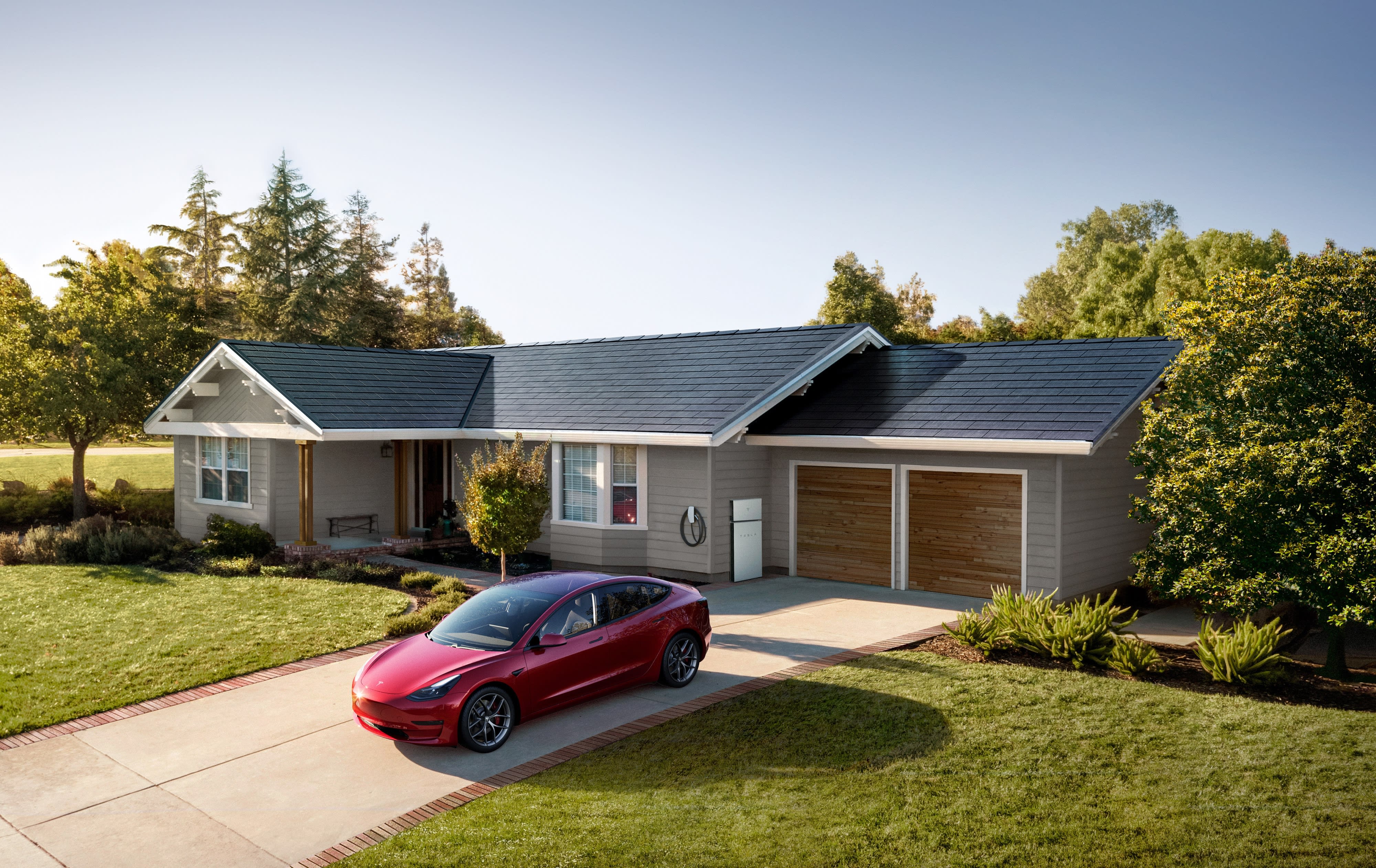
Your electric vehicle (EV) shows your commitment to reducing your environmental impact. However, with fluctuations in the energy price cap impacting your power savings, you’re likely looking for ways to reduce your charging costs.1 You’re not alone. Many other EV owners are turning to solar panels as a solution. In fact, a 2023 government survey found that 70% of people in owner-occupied homes in the UK are considering installing solar panels in the next few years.2 By using solar energy for your home and vehicle charging, you can save money, gain control over your energy use, and achieve energy independence.
Why EV Owners Are Considering Solar Power
Charging your EV at home is convenient. Still, it means that instead of filling up at the petrol station, you're "filling up" from the electrical grid, with the higher energy bills that go with it. Depending on where you live, that could cost more in electricity than a traditional vehicle would in petrol. The increased demand for EVs, coupled with a growing awareness of climate change and a desire for greater personal control over energy sources, is driving a surge of interest in residential solar power among EV drivers for several reasons:
- Reduced energy expenses: Optimise electricity use and get the full benefit of charging at home.
- Energy independence: Decrease reliance on external energy suppliers.
- Environmental responsibility: Reduce your overall carbon footprint.
- Control over rising costs: Combat rising grid energy prices with self-generated power.
By taking control of their energy generation, EV owners can align their transportation choices with a broader commitment to sustainability and long-term financial stability.
The Real Cost of Charging Your EV Without Solar
The cost of charging an EV from the grid varies widely due to factors like location, energy supplier rate structures (flat rate, time-of-use, or tiered pricing), and the time of day. Charging during peak hours, when electricity demand is highest and prices are often inflated, can be much more expensive and reduce potential savings. Off-peak charging is often cheaper, but it requires careful planning and scheduling, which can be inconvenient. These variables make it difficult to predict the long-term costs of EV charging, adding uncertainty to household budgets.
The overall environmental benefits of driving an EV are reduced if the electricity used for charging is mainly generated from fossil fuels. While EVs have no tailpipe emissions, their overall carbon footprint depends on the source of their energy. Many areas still rely on coal or natural gas to generate electricity, meaning that charging your "green" EV at home can still contribute to greenhouse gas emissions. Even though an EV charged on the grid has much lower lifetime global warming emissions than a comparable petrol car, the true environmental advantage of your EV is maximised when it is powered by clean, renewable energy.3
How Solar Can Help You Charge for Less
Solar power is the breakthrough EV owners have been looking for. Rooftop solar panels convert sunlight into clean, renewable electricity for your home and EV. Key benefits include:
- Power your EV: Reduce reliance on the grid by using self-generated electricity for charging.
- Lower energy bills: Save money on your energy bill by offsetting your electricity consumption.
- Maximise clean energy use: Ensure your driving is powered by 100% renewable energy.
For nighttime charging, an integrated home battery system stores generated solar power for when you need it. Integrated battery storage solutions provide the following benefits:
- Store excess solar: Save daytime solar energy for nighttime or off-peak EV charging.
- Enable 24/7 clean charging: Power your vehicle with solar, even when the sun isn't shining.
- Provide backup power: Keep your home and EV powered during grid outages.
- Optimise energy use: Intelligently manages energy flows for efficiency and savings.
The financial benefits are clear: reducing your reliance on grid power protects you from rising electricity costs. Government schemes such as the Smart Export Guarantee (SEG) also allow you to sell excess energy back to the grid, providing an additional income stream. An integrated ecosystem with solar panels, home battery storage, and EV charger enables you to monitor and manage your energy generation, storage, and vehicle charging all from one intuitive platform. This approach simplifies energy management and optimises your solar investment.
What to Know About Pairing Solar with an EV
Pairing solar with your EV is a wise choice, but it requires planning to ensure the system is tailored to your needs. The first step is to assess your current household electricity usage and your EV charging habits. Since an EV increases energy demand, it's crucial to estimate your daily and weekly charging needs accurately. It's also important to consider your average daily mileage, how often you charge at home, and whether you charge to 80% or 100%.4
Home energy specialists can provide personalised recommendations based on your household electricity consumption patterns and driving habits. They will help you determine the ideal size for your solar panel system and whether you need home battery storage, especially if you plan to charge predominantly with solar energy or require backup power.
When installing solar panels, consider your energy usage and practical factors like the size, orientation, and sunlight exposure of your roof. In the UK, a south-facing roof with minimal shading will generate the most energy. Be aware of local regulations and permitting requirements, which differ by region. A professional can often handle design, permitting, and installation, simplifying the process for homeowners. By understanding these factors upfront, you can optimise your solar investment for your home and EV, ensuring maximum efficiency and savings.
Is Solar Worth It for You? Key Factors to Consider
If you decide to invest in solar power, especially when you drive an EV, there are several personal and environmental factors to consider. The major ones are:
- Location: Solar panels need sunlight, and more is better. Areas with plenty of consistent daylight will naturally generate more electricity, resulting in quicker payback times and greater long-term savings. Although solar power can work in many different climates, it's still most effective in places that have plenty of sunshine.
- Energy costs: Solar power is most cost-effective when local energy rates are high. The return on your investment accelerates in proportion to the grid price in your area. When the grid price is high, you save more by using solar power. This is especially true in areas that have seen significant electricity price increases.
- Driving habits: The more you charge your EV at home, the more you can use the clean power from your solar panels. If your daily commute demands frequent charging, offsetting that energy consumption with solar can lead to substantial savings compared to relying on grid power.
- Homeownership: Solar panel systems are a long-term investment. Owning your home offers the stability needed to maximise the financial and environmental benefits of the investment. If you rent or are likely to move frequently, the upfront costs make it less appealing.
Long-term savings and potential return on investment (ROI) are the primary considerations when evaluating an investment in solar power. Although the upfront costs can be high, government incentives, the 0% VAT rate on installations, and lower electricity bills can make solar financially beneficial over time.5
If you already own an EV or are thinking of getting one, then solar might be about more than cutting costs; it's a step towards a more sustainable lifestyle and greater energy independence, combining transportation and home energy use into an efficient, eco-friendly system.
What to Look for in a Home Solar Energy System
If your solar energy system is difficult to use, you won't use it. That's why an easy-to-use, fully integrated system is the way to go.6 The system should take the stress out of managing your home solar setup with a comprehensive solution that seamlessly connects your solar energy generation, battery storage, and electric vehicle charging.
- Seamless compatibility: The different parts of the system should work together correctly, so you don’t have to manually manage the interaction between multiple disparate products. The system should make your life easier, not more complicated.
- Centralised control: Manage and control everything from one place. Ideally, you’ll have complete oversight from a single app, allowing you to monitor energy generation, storage, usage, and EV charging from one place.
- Intelligent energy management: The system should be smart enough to redirect power to where it's needed, when it’s needed. The system should, for the most part, manage itself. The management system should prioritise vehicle charging when solar energy is abundant and provide backup power during outages.
- Optimised efficiency and savings: The balance of generated power, stored power, and grid power must be effectively managed. If you have to monitor grid prices and power production manually, that’s a red flag. The system should manage all these energy flows intelligently.
The Tesla ecosystem of home energy products, centrally controlled through the Tesla app, includes solar panels, Powerwall, and a Tesla charger. They provide a seamless, integrated system that makes your home energy management nearly effortless, working in the background to optimise energy flows to suit your specific needs. Choosing Tesla for your solar and EV needs means embracing a future where your home and vehicle work seamlessly together using clean energy.
Ready to take control of your energy future? Tesla Certified Installers can assess your energy needs, home setup, and other factors to help you get started. Find a Certified Installer in your area and discover how an integrated energy solution can transform your home and driving experience.
References
1 Ofgem. (2025, February 25). Changes to energy price cap between 1 April and 30 June 2025.
https://www.ofgem.gov.uk/news/changes-energy-price-cap-between-1-april-and-30-june-2025
2 Department for Energy Security and Net Zero. (2023). Public attitudes tracking survey.
https://www.gov.uk/government/statistics/desnz-public-attitudes-tracker-winter-2023
3 International Council on Clean Transportation (ICCT). (2025, July 1). Life-cycle greenhouse gas emissions from passenger cars in the European Union.
https://theicct.org/publication/electric-cars-life-cycle-analysis-emissions-europe-jul25/
4 Geotab (2025, July 8). EV battery health insights: Data from 10,000 cars.
https://www.geotab.com/blog/ev-battery-health/
5 The UK government has implemented the following:
- Smart Export Guarantee (SEG) pays homeowners for exporting excess renewable electricity to the grid.
https://www.gov.uk/government/publications/smart-export-guarantee-seg-earn-money-for-exporting-the-renewable-electricity-you-have-generated - A 0% VAT rate on solar panel and battery installations in residential properties until March 31, 2027.
https://www.gov.uk/guidance/vat-on-energy-saving-materials-and-heating-equipment-notice-7086
6 Liu, X., Wu, Y., Wu, H. (2021, December 14). PV-EV integrated home energy management considering residential occupant behaviors, Sustainability 13(24), 13826.
https://www.mdpi.com/2071-1050/13/24/13826