Superior Durability of Cybertruck HFS (Hard Freaking Stainless)
June 20, 2025
In 2019, Tesla vehicle designers and engineers were challenged to rethink their approach to vehicle exteriors, going back to a first principles approach inspired by Elon’s vision to create a futuristic pickup that "doesn't scratch, doesn't dent, doesn't rust.”
These constraints and objectives resulted in the engineering team researching alloy design, since conventional automotive materials were insufficient.
This led to the invention of a new steel alloy – referred to by Tesla as HFS (“Hard Freaking Stainless”). This material provides Cybertruck with several real-world performance benefits related to corrosion resistance and impact resistance.
HFS Offers Increased Exterior Durability
- Seven-times stronger and more scratch resistant than typical exterior steel materials.
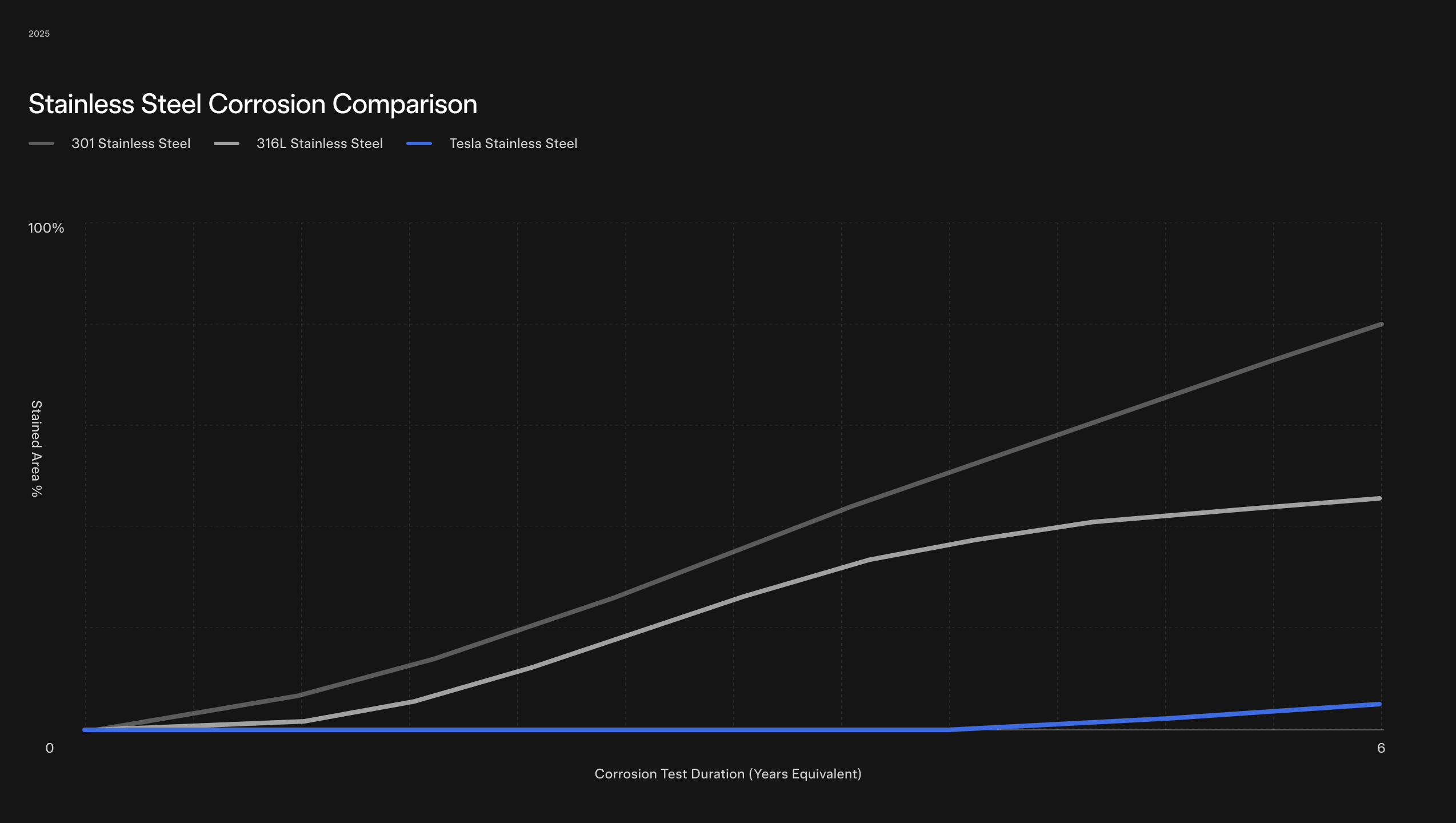
- Corrosion and rust resistant in line with 316L marine-grade stainless steels used for boats, medical devices and watches.
- Impact resistance capable of withstanding dents from rocks to shopping carts and piercing impacts from small arms fire.
- Removes the need for paints and other surface coatings for protection.
HFS is Corrosion Resistant
During its development, we exposed our HFS samples to extreme environments, including salt spray and high humidity at elevated temperatures. These tests mimic the impact of twelve years' worth of exposure in challenging environments ranging from the humid Florida shoreline to icy Canadian roads in winter. HFS material showed limited corrosion even if left uncleaned over an extended period in these types of environments.
Cybertruck HFS panels are resistive to rusting, due to a thin protective oxide barrier on the steel surface. Standard car doors (made from mild steel) are, by comparison, highly susceptible to rusting unless protected by additional coatings and paint. Paint scratches can lead to rusting on standard car doors, which can spread across the panel and lead to structural damage.
Despite its high resistance to rusting relative to standard car panels and contrary to its name, stainless steel can experience light superficial corrosion through pitting, which can lead to staining; however, in simulated testing representing a decade of use, HFS outperforms other types of stainless steel in its resistance to staining. Tesla HFS shows less than 50% staining compared to other common stainless steels after simulated testing.
Pitting occurs when the protective oxide layer on the steel becomes less resistant, causing it to superficially corrode in the form of tiny, microscopic “pits.” Pitting tends to only occur on the surface, so it does not affect structural integrity on stainless steel. On average, any pitting on Cybertruck panels over the lifespan of the vehicle should not exceed 50 microns wide and 20 microns deep—roughly a quarter of the width of a human hair or < 2% of the thickness of Cybertruck panels.
Rusting on standard car doors can occur more rapidly through both pitting and uniform corrosion, the latter appearing as a widespread or layer of rust. Mild steels exposed to harsh conditions can cause pitting and uniform corrosion to occur and spread rapidly, penetrating the panel’s thickness, leading to holes that impact structural integrity at a rate as fast as 200 microns per year, or 10x the depth of a lifetime of pitting corrosion on Cybertruck panels.
Often the appearance of rust on Cybertruck exteriors is not the result of stainless-steel corrosion, but is the result of metallic debris on the surface corroding. Even in cases where rust does occur, it is surface level, can easily be cleaned and will not impact structural integrity.
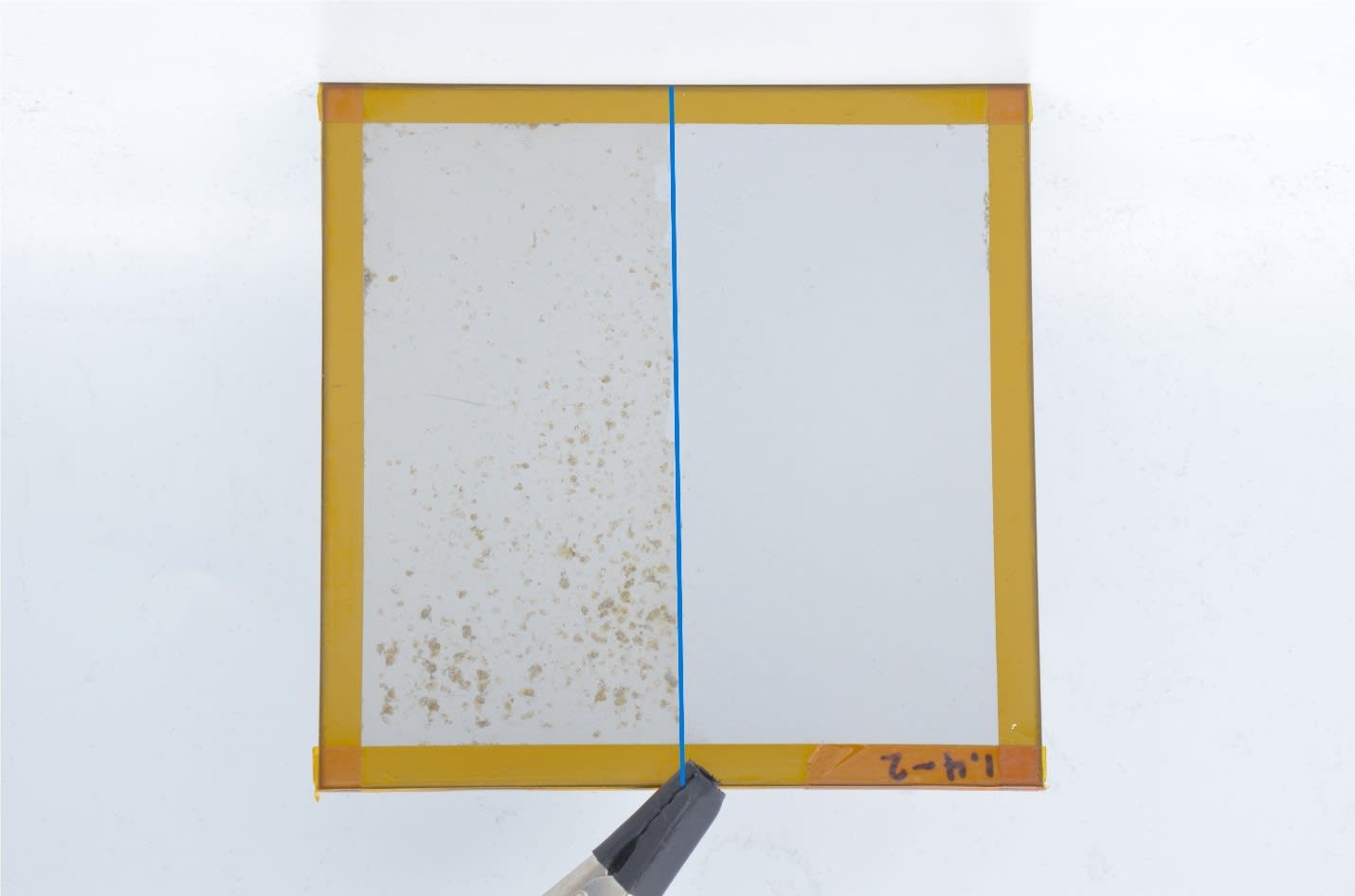
Left- example of HFS sample that has undergone corrosion test exposure equivalent of 10 years of use with no cleaning. Right- Cleaned HFS sample
Learn more about Cybertruck exterior cleaning and maintenance recommendations in the Owner’s Manual.
HFS is Impact Resistant
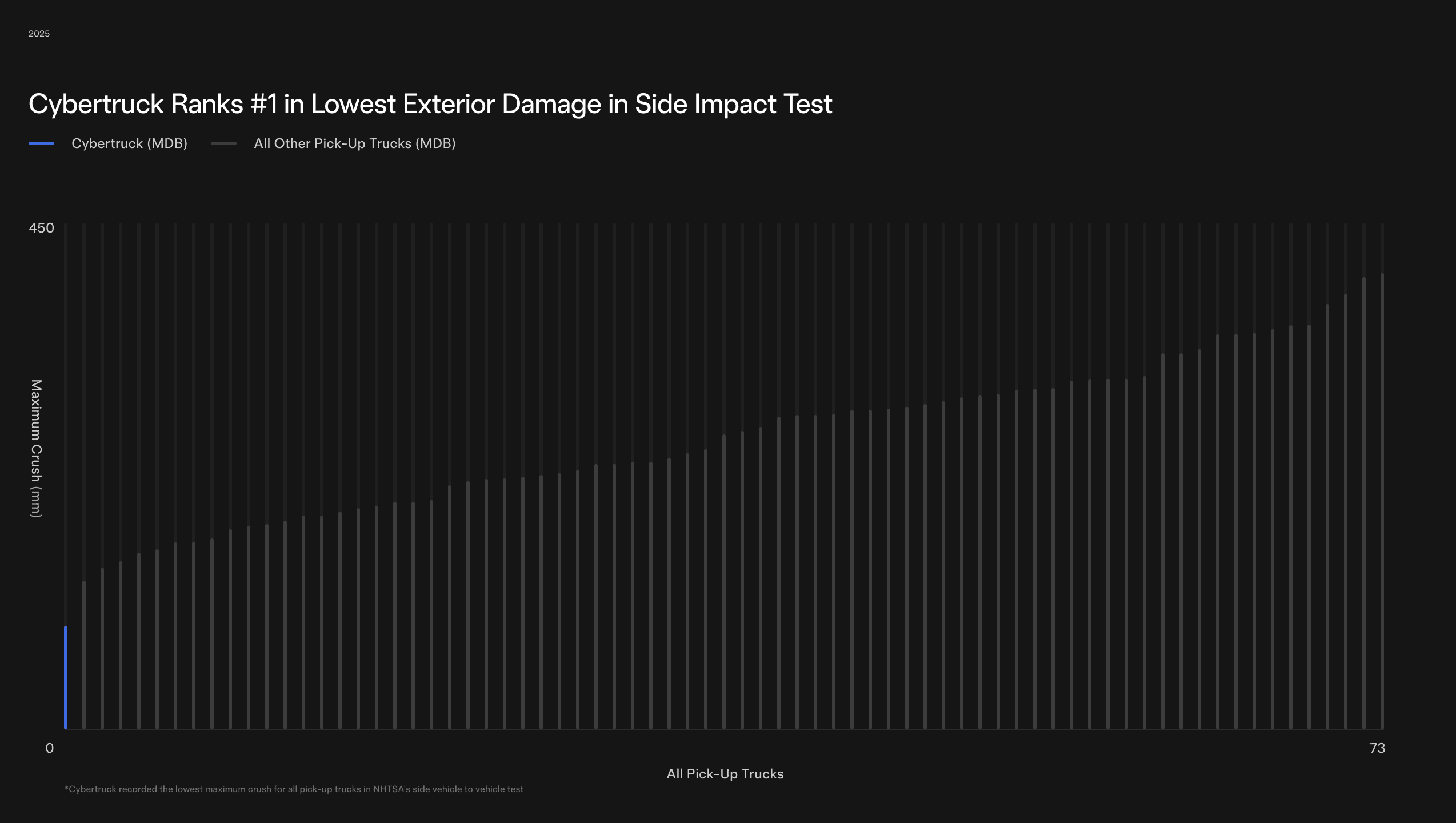
The impact resistance of the stainless steel exterior acts as a protective exoskeleton that removes the need for some conventional car components, increasing vehicle durability without compromising safety-Cybertruck recently received a five-star overall safety rating from the NHTSA (National Highway Traffic Safety Administration) and had the lowest amount of residual exterior damage out of any truck tested in its class for vehicle to vehicle side impact scenario.
The hardness of HFS – like that of 301 stainless, which can be found in industrial fasteners or kitchenware, reduces the likelihood of scratching. While standard car doors cannot withstand any ballistic impact, Cybertruck HFS can resist penetration from some forms of small arms fire.
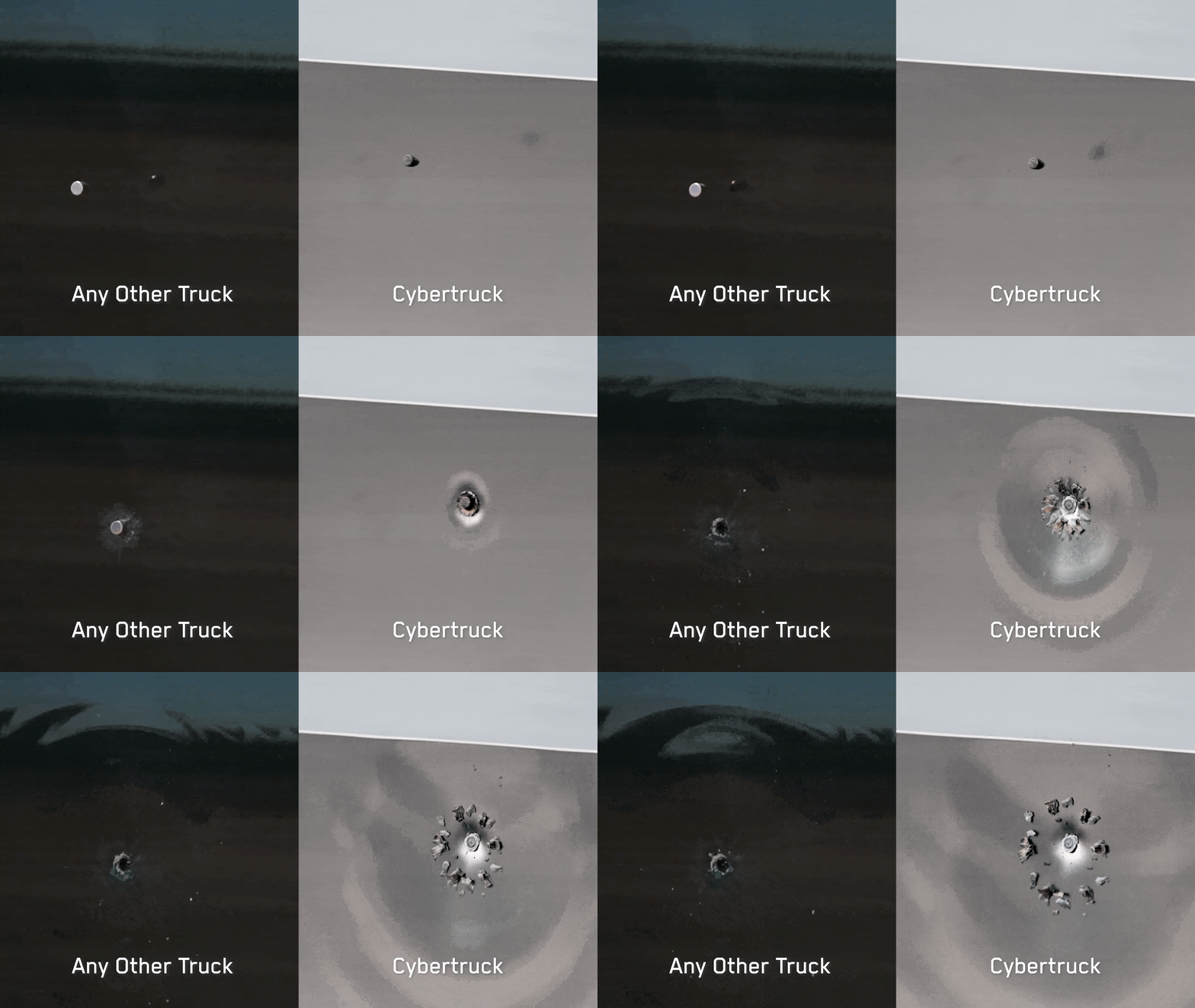
Watch the full Cybertruck bullet test video
Watch the Cybertruck crash safety video
Visit a Tesla location near you or schedule a demo drive to experience Cybertruck for yourself.