Results: ConnectedSolutions VPP Pay-for-Performance Model
August 27, 2025
Pay-for-Performance Virtual Power Plant Model Demonstrates Reliable Capacity
Virtual Power Plant (VPP) Spotlight: ConnectedSolutions
As a record-breaking heatwave kicked off the summer season in the Northeast, battery-based VPPs are proving their value. Since 2019, the ConnectedSolutions program has operated under a "Pay-for-Performance" model, where participating households with home storage systems are compensated for sending energy back to the grid during peak demand periods. Customers are paid based on the actual energy delivered during events and can opt out of events.
Once enrolled, the incentive rate is locked in for five years – providing consistency and alignment across utilities, aggregators, and participants. This stability helps scale the program and ensures continued participation.
Program Details
| State | Utility | 2025 Incentive | 5-Year Incentive Lock |
|---|---|---|---|
| MA | National Grid1 | $275 per kW | ✓ |
| Eversource2 | $275 per kW | ✓ | |
| Cape Light Compact3 | $275 per kW | ✓ | |
| RI | Rhode Island Energy4 | $225 per kW | ✓ |
In this structure, utilities pay aggregators based on the total delivered capacity, and aggregators then compensate participating households. This model supports broad participation and diverse battery ownership arrangements by aligning economic incentives.
Tesla Powerwall Participation
Powerwall systems enrolled in ConnectedSolutions are dispatched up to 60 times per year between June 1 and September 30, for up to three hours per event. Annual data of the BTM battery VPP demonstrates that it’s a reliable capacity resource delivering dozens of megawatts when the grid is in need.
| 2023 | 2024 | 2025-07-01 | |
|---|---|---|---|
| Powerwalls Enrolled | 6,364 | 7,732 | 8,289+ |
| Powerwall Nameplate Capacity (MW) | 34MW | 42MW | 47MW+ |
| Powerwall Event Participation % | 99.8% | 97.3% | 95.4% |
| Total Number of Events Across Utilities | 222 | 524 | 25 |
| Average Tesla Customer Payout | $1,298 | $1,492 | TBD |
Participation Snapshot:
- ~70% of eligible Powerwall households are enrolled.
- The average customer has set a 20% backup reserve, contributing the remainder of their battery to the VPP.
Program Design Matters
ConnectedSolutions has become a proof point for how well-designed programs can scale customer-sited storage and provide flexible, reliable grid capacity. With more than $5.7 million per year in system benefits5, which will reduce costs for all customers, the ConnectedSolutions VPP program demonstrates how effective a “Pay-for-Performance” model can be when aligning incentives and program design.
- Fair and Consistent Customer Incentives. The five-year rate lock provides financial predictability for all parties.
- Predictable Power. Even when there are back-to-back events over many days, and the ability for customers to opt-out, participation stays above 95%.
- Positive Customer Experience. Capacity is reliable because there is no direct impact on a customer’s comfort. The program is fully automated, so there is no need for customer action or behavior change.
Furthermore, ConnectedSolutions represents a well-designed program that leads to higher solar and storage adoption. Based on Tesla’s VPP program and Powerwall sales data, there is an 8% uplift in solar and Powerwall sales correlated with VPP programs, and a ~28% sales increase for every $1,000 in average annual VPP incentive. On average, the ConnectedSolutions program has increased solar and Powerwall sales by over 30%.
Powerwall Fleet Performance
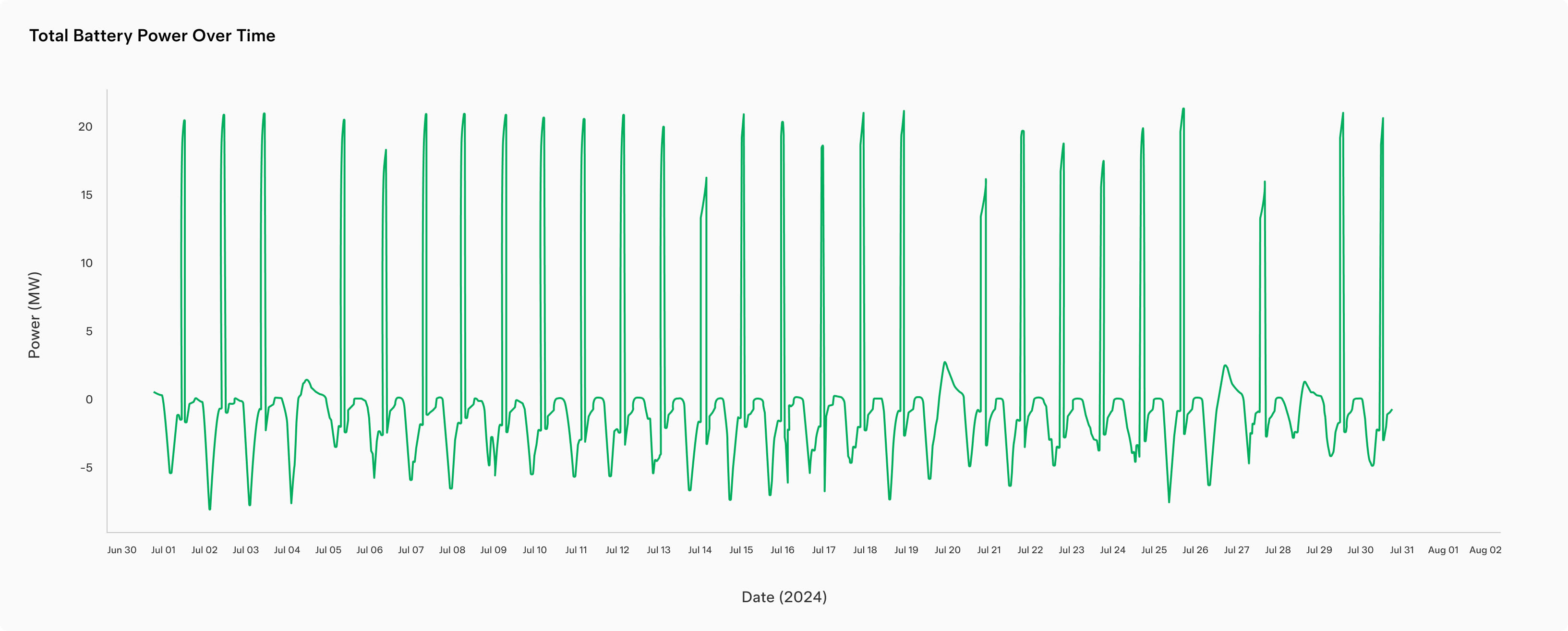
In July 2024, Massachusetts utilities, including National Grid, Eversource, and Cape Light Compact called 27 separate two-hour dispatch events. These consistently delivered over 20 MW across thousands of homes, demonstrating day-over-day reliability at scale. See graphs below.
ConnectedSolutions Powerwall VPP | July 2024 Performance
National Grid MA Powerwall Fleet | Week of August 13, 2024
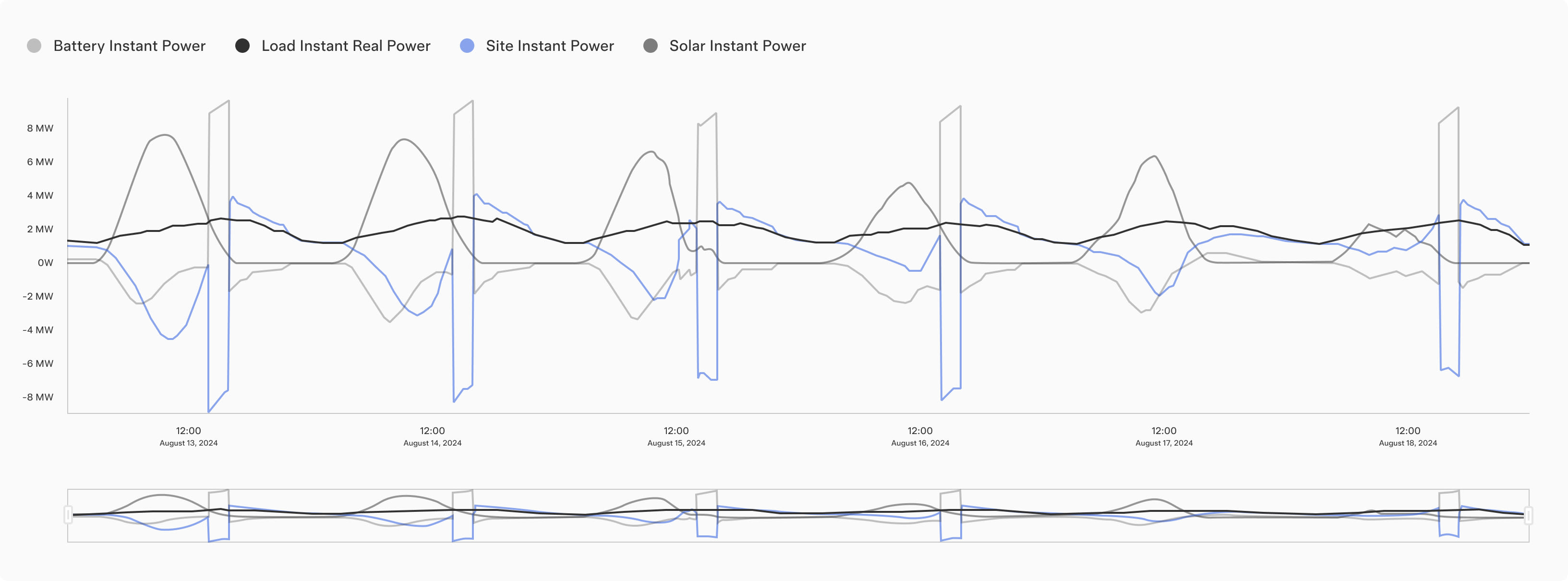
Unlike traditional demand response, where utilities ask customers to reduce usage (e.g., adjusting thermostats), battery-based VPPs provide dispatchable energy to the grid, making them more resilient to behavior-driven variability.
Grid 2.0 Capacity Plans
Battery-backed VPPs offer an alternative to traditional capacity procurement, which typically requires upfront payments, long-lead times and penalizes generators for non-performance. Power plant outages from fuel shortages, mechanical failures, or weather events are not uncommon. Battery VPPs avoid these risks, and ramp-up takes months—not years.
Benefits Across Stakeholders
- Households earn money for sharing their energy when the grid needs it most.
- Aggregators operate and scale with certainty.
- Utilities leverage existing clean energy infrastructure and only pay for performance.
- Grid Operator improves reliability without building expensive peaker plants.
- Community reduces local emissions and pollution.
- Manufacturer increases customer adoption and value-added services.
As utilities and regulators look to build more reliable distributed capacity, ConnectedSolutions shows that a performance-based model can lay the foundation, while allowing for future commitments as the market matures.
References
1 National Grid, Demand Response Programs,
https://www.nationalgridus.com/connectedsolutions
2 Eversource, Home Battery Storage and Rewards,
https://www.eversource.com/content/residential/save-money-energy/clean-energy-options/energy-storage-solutions
3 Cape Light Compact, Enroll My Battery – ConnectedSolutions,
https://www.capelightcompact.org/program/enroll-my-battery/
4 Rhode Island Energy, Connected Solutions,
https://www.rienergy.com/site/ways-to-save/save-money-with-rebates-and-incentives/connectedsolutions
5 National Grid delivers $5.7M+ per year in system benefits with energy storage solution,
https://www.energyhub.com/resource/national-grid-storage-case-study