What is Net Energy Metering?
June 16, 2025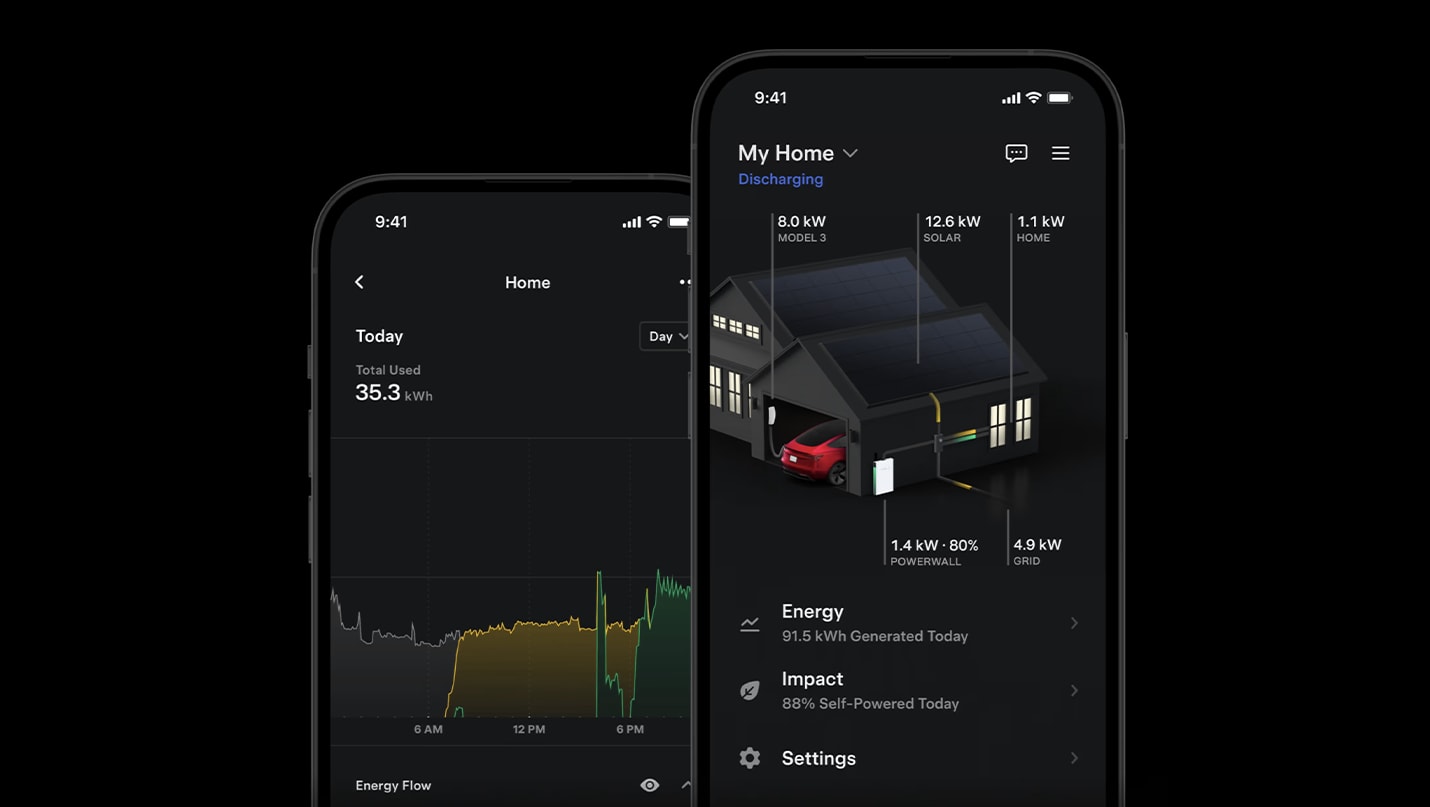
Image used for illustration only. Energy buy prices and credits may vary.
Net Energy Metering (NEM) is a billing mechanism that credits solar system owners for the electricity they export to the grid. Anytime your solar system produces more energy than your home is consuming in that moment, that energy is exported back to the grid. If your utility offers a NEM program, you receive credits on your utility bill for that exported energy1. These credits can offset the cost of power you import from the grid at other times, such as during the night or cloudy days.
NEM ensures that every kilowatt-hour (kWh) of solar energy you produce is accounted for and valued, maximizing the return on your solar investment.
How NEM Works
NEM operates on a simple principle: your electricity meter tracks both the energy you import from the grid and export to the grid from your solar panels or home battery. NEM allows you to ‘bank’ these credits to use later, reducing your electricity bill.
Example:
| Month | Solar Generation | Consumption | Net Export / Import | Utility Bill |
|---|---|---|---|---|
| 1 | 1,000 kWh (Sunny) | 800 kWh | +200 kWh | 200 kWh credit |
| 2 | 550 kWh (Cloudy) | 800 kWh | -250 kWh | Credit applied → utility charge for only 50 kWh |

*Selected illustration from the Tesla App showing energy exported to the grid, and a corresponding buy price. Image used for illustration only. Energy buy prices and credits may vary.
This process allows you to balance out periods of high and low solar production, ensuring consistent energy savings. Keep in mind that most utilities include fixed monthly charges, such as customer service or connection fees. These charges remain even if you have net positive credits.
NEM vs Net Billing
NEM and Net Billing are programs that credit customers for the electricity their solar systems export back to the grid, but they work differently and that can affect your utility savings.
With NEM, the value of the credit you receive for exporting electricity back to the grid is based on the retail value the utility would charge you to import it from the grid. In some cases, this credit is a full 1:1 match (e.g., 10¢/kWh exported: 10¢/kWh imported). In others, the export credit may be lower (e.g., 5¢/kWh exported: 10¢/kWh imported), depending on your utility’s policy2.
With net billing, you are still compensated for exported energy, but at a value that is separate from the retail electricity rate. This export rate may be higher or lower, depending on your utility's rate plan, the time of day, and the time of year. The difference between your export compensation rate and your import purchase rate determines how this impacts your overall savings.
Understanding which program is available in your area is essential when calculating the potential financial returns of your solar investment.
Other NEM Considerations
Time-of-Use Rate Plans
If your utility uses time-of-use (TOU) rates, the value of your solar exports and imports can also vary depending on when they occur. Some NEM programs allow exported energy to offset imported energy only within the same TOU period. For example, credits generated during peak hours may only offset consumption during peak hours but cannot be applied to off-peak consumption.
True-Up
Most utilities have a true-up process at set intervals, where they look at your net credits total. If you’ve banked less credits than you’ve consumed, you will get billed the retail price for the difference. If you have banked more credits than you have used, depending on the utility the remaining balance may be:
- Paid out (often at a wholesale or avoided-cost rate, which is lower than retail)
- Reset to zero (with no payout)
- Rolled over into the next year.
Most commonly the true up is annual, but some utilities do it monthly. Review your utility’s policy to avoid losing unused credits.
System Sizing Limitations
Some utilities cap the size of residential systems eligible for NEM. Larger systems may be subject to different compensation rules, or none at all.
Where is NEM Available in 2025?
NEM policies vary across the United States, with different states and territories implementing their own regulations. While some continue to offer full retail-rate NEM, others have moved to alternative compensation structures or phased out traditional programs.
To determine the specific NEM policies available in your area, check the Database of State Incentives for Renewables & Efficiency (DSIRE) or simply speak with a Tesla Advisor. They will walk you through the policies in your area and help ensure you are getting the most value from your system, so you don’t have to figure it all out on your own.
References
1 Solar Energy Industries Association. What is net metering? https://seia.org/net-metering/.
2 Database of State Incentives for Renewables and Efficiency (DSIRE). Net Billing. https://programs.dsireusa.org/system/program/detail/3093?