Customers can maximize savings with the NBT, or NEM 3.0, this August. Learn more about the NEM 3.0 benefits in August and how you can enroll.
Net Billing Tariff (NEM 3.0)
Net Billing Tariff (NBT), sometimes referred to as NEM 3.0, is the California solar billing policy that went into effect on April 15, 2023 and applies to all new solar systems installed in these utility territories:
- Pacific Gas & Electric (PG&E)
- Southern California Edison (SCE)
- San Diego Gas & Electric (SDG&E)
NBT increases the value of battery storage for your home. To maximize your savings, Tesla will pair solar systems with Powerwall for all California customers who are enrolled in NBT.
Net Energy Metering (NEM) programs compensate customers for exporting solar energy to the grid. NBT, or NEM 3.0, is a set of policies that dictate how California customers earn credits for energy exported to the grid.
Impacts of the NBT
NBT, or NEM 3.0, significantly increases the value of batteries for two main reasons:
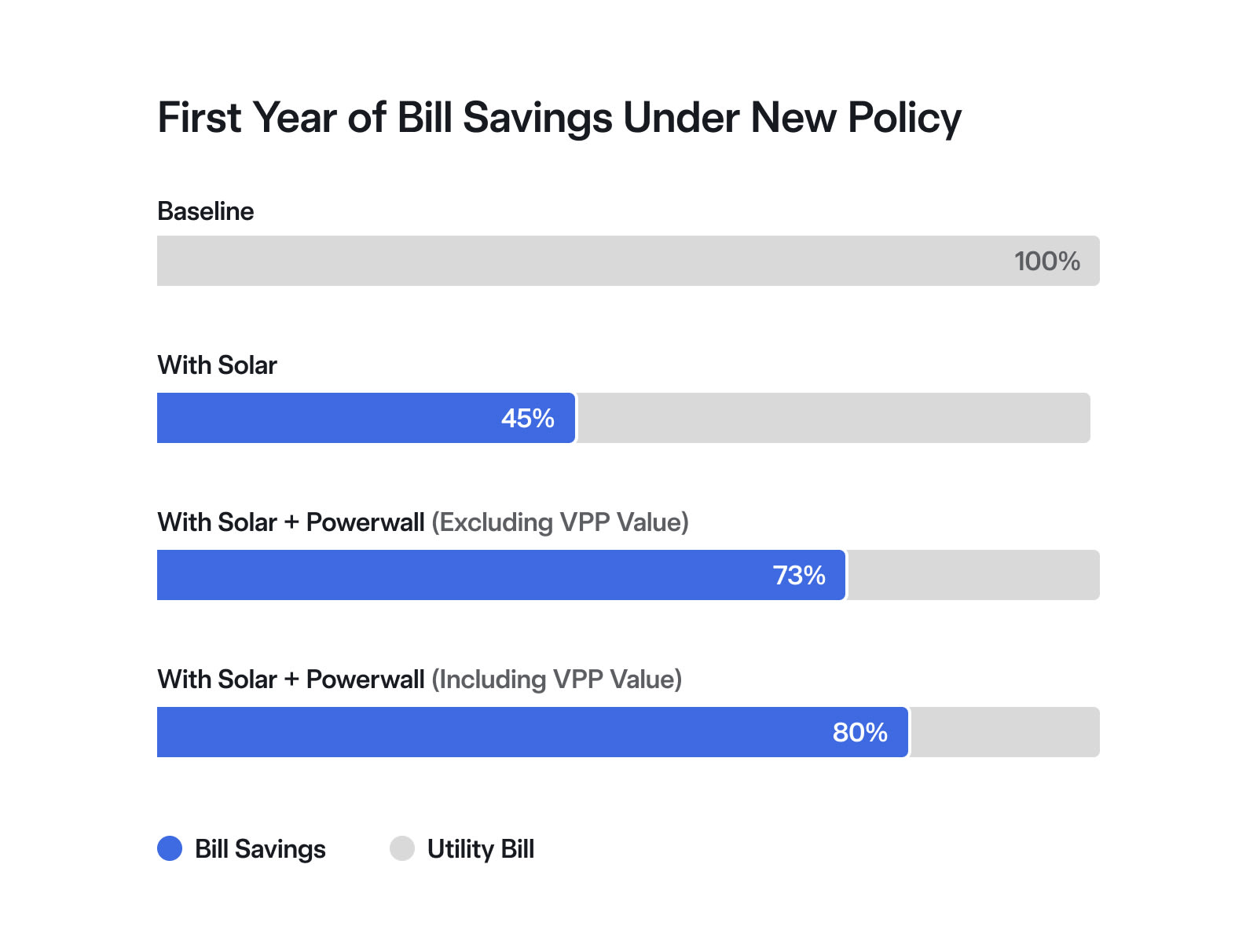
- Using more of your own solar power allows you to save more: Adding Powerwall allows you to store solar energy and use it later, instead of exporting it to the grid for minimal credit. A solar-only system will reduce the median customer’s electricity bill by 45%; with Powerwall, the bill will go down by 73%.1
- You earn more during Power Hours: "Power Hours" is the time during the day when the demand is high, usually in the evening after work hours. Powerwall’s intelligent, customizable software allows you to take advantage of Power Hours in August when credits are 15x higher than the lowest export prices during the same month.2
NBT Benefits
With the NBT, or NEM 3.0, the export or sell price varies depending on the time of day and year. For PG&E customers as an example, review the export compensation that can be potentially earned based on the 2025 PG&E Weekday Export Rate3.
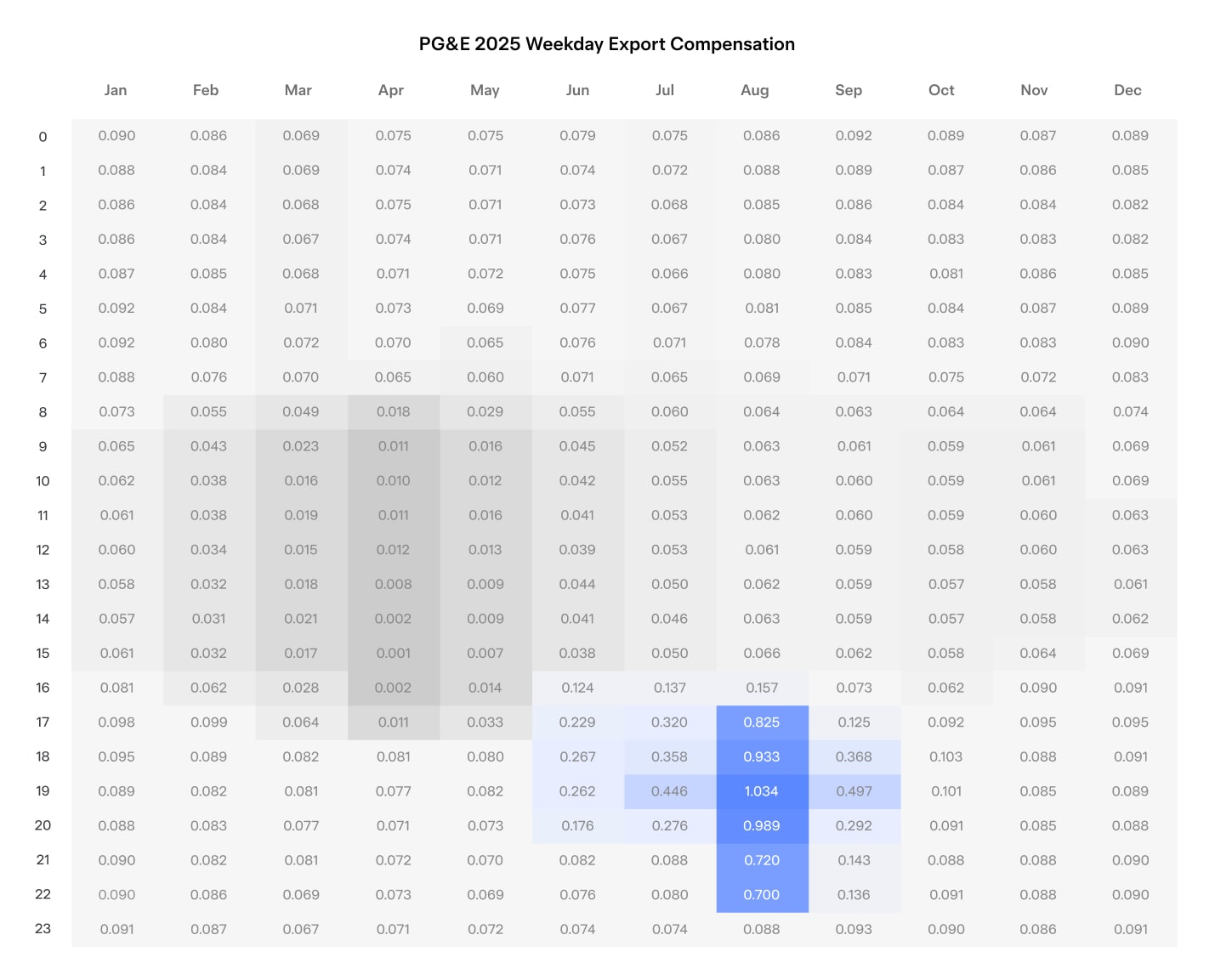
View the 2025 export compensation breakdown of the three largest California utility companies:
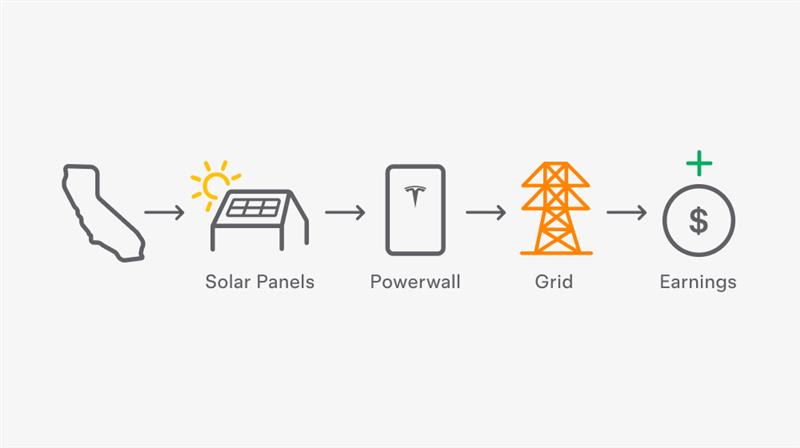
Sell More Stored Energy in the Summer
Powerwall sells your extra stored energy to the grid when the sellback rates are higher so you can earn more money.
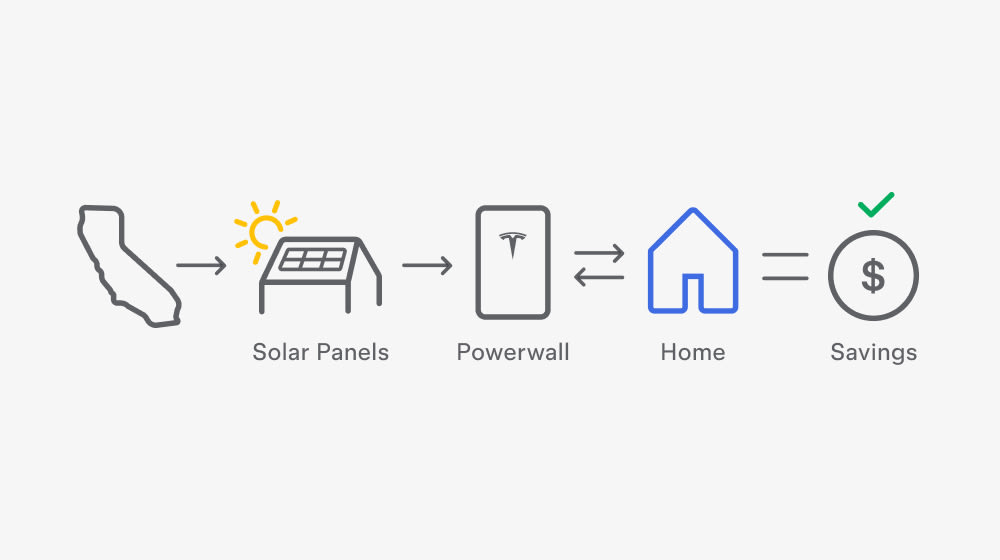
Use More Stored Energy the Rest of the Year
During the rest of the year when sellback rates low, Powerwall efficiently stores energy to power your home for free so you can save on electricity bills.
How to Confirm If You Are an NBT Customer
All interconnection agreements after April 15, 2023 should be on an NBT rate plan. Your individual circumstances depend on when your installer submitted the application and your billing anniversary.
Check the interconnection agreement or contact your utility company to confirm if you are currently being billed on an NBT rate plan.
How to Select Your NBT Rate Plan in the Tesla App
Once confirmed with your utility company, you can set up and review your NBT rate plan in the Tesla app by following these steps:
- From the home screen, open the ‘Settings’ menu.
- Tap ‘Utility Rate Plan.’
- Tap ‘Start,’ or if your system already has a rate plan, tap ‘Start Over.’
- Select your ‘State and Utility’ and select your rate plan.
- For PG&E customers, select E-ELEC-NEM3.
- For SCE customers, select TOU-D-PRIME-NEM3.
- For SDG&E customers, select EV-TOU-5-NEM3.
- Tap ‘Save.'
Your Powerwall Settings for the NBT
Depending on your Powerwall settings, your savings will vary. Some Powerwall settings, such as Self-Powered or a high Backup Reserve level, can significantly reduce your savings. If you select an NBT rate plan in the Tesla app, we will provide you with suggested settings for your Powerwall to maximize your savings with a single tap.

The suggested settings are:
- Set Backup Reserve level to 0%.
- Set the operational mode to Time-Based Control.
- Set Energy Exports to Everything.
You can adjust the settings at any time in the Settings menu.
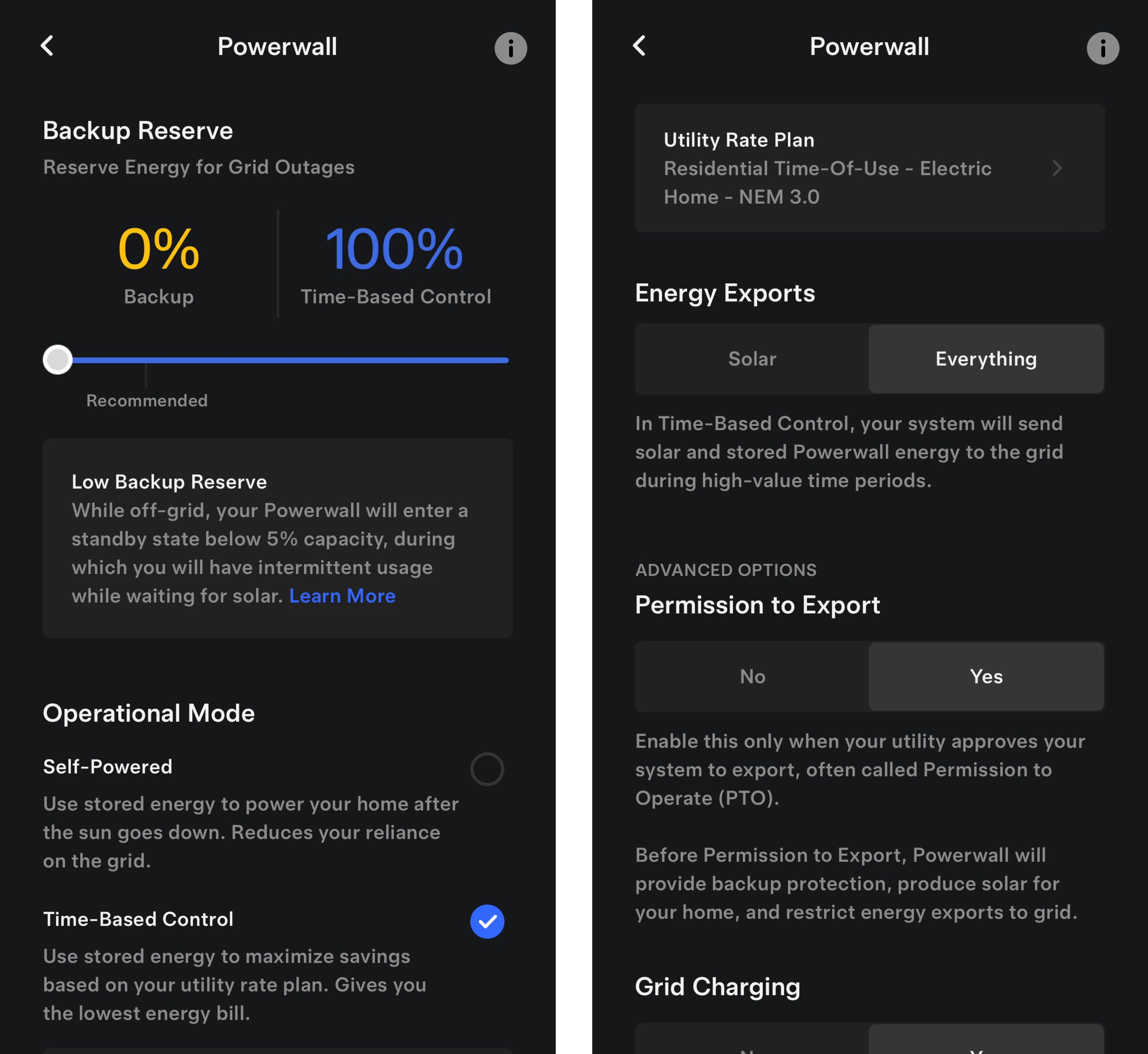
Note: If Energy Exports is not available in the Tesla app, your utility company does not allow Powerwall to export energy to the grid for any time-of-use purposes.
With these settings, Powerwall will limit your home consumption from the grid. Your Powerwall will prioritize supplying your home with stored energy during peak and partial-peak times to help you save more on your electricity bill by relying on your home battery rather than the grid.
If Powerwall predicts that your solar system won't produce enough energy to meet your home consumption needs during a high-cost time (peak period), it may decide to hold back some stored energy during a low-cost time (off-peak period) to power your home when energy import prices are high.
During late summer afternoons, when energy export prices are high, Powerwall may export as much energy as it can to the grid to help you save even more on your electricity bill.
After the peak export price months of August and September, you can adjust these settings with no major impact on savings.
Get Updates
You can also sign up to receive the latest news, events and product updates when it comes to Tesla.
Frequently Asked Questions
How do I know which policy my system was installed under?
If you purchased your solar and Powerwall system directly from Tesla, find your interconnection agreement by tapping on ’Documents’ in the Tesla app. Your interconnection agreement should show either a NEM 2.0 agreement or an NBT agreement (2025, 2024 or 2023).
If you bought your solar and Powerwall system from a Tesla Certified Installer:
- Look for your interconnection application on your records. The utility company likely emailed it as an attachment. The application should show either a NEM 2.0 application or an NBT application.
- Contact your Certified Installer.
How are my export compensation rates determined?
Homeowners with solar systems are subject to different export compensation rates depending on their interconnection application date and PTO date.
- NEM 2.0 Eligibility: Systems with applications filed before April 15, 2023, and receiving PTO before April 15, 2026, qualify for the NEM 2.0 tariff, which offers fixed rates determined by each utility's residential rate schedule.
- NBT Eligibility: Applications submitted on or after April 15, 2023, fall under California’s Net Billing Tariff (NEM 3.0). Under NBT, export compensation rates are determined by the year in which you receive PTO, referred to as the "vintage year," and are locked in for 9 years based on the California Avoided Cost Calculator (ACC) for that year.
- ACC Vintage Details: Systems with PTO in 2023 and 2024 use the 2022 ACC values for their export rates. Those with PTO in 2025 and 2026 use the updated 2025 ACC values, which reflect changes in energy market conditions, while the overall net billing structure remains unchanged.
1 The financial savings estimates are based on simulations of existing Tesla customer sites within the utility service territory, using actual household consumption and solar production data. Tesla’s internal optimization tool, Opticaster, is used to model battery behavior under real-world conditions. The analysis incorporates active tariffs from the applicable utility, including time-of-use pricing, export compensation, and fixed charges. Additionally, the simulation accounts for current operating rules pertaining to solar and storage within each utility service territory. For backup power calculations, we use average hourly load and solar production profiles from Tesla’s existing fleet. The outage scenario assumes a 12 PM start time, with the battery being solely responsible for providing backup power, without additional contributions from solar generation. The Powerwall is modelled with a 20% minimum state of charge and follows Time-Based Control, optimizing battery dispatch to minimize the household’s electricity bill.
2 15x represents a simple average of the ratio of max export rates to minimum export rates in August for PG&E, SCE, and SDG&E.
3 Export Compensation Rates under the Net Billing Tariff are determined by California's 2024 Avoided Cost Calculator (ACC). The ACC calculates several types of avoided costs due to behind-the-meter exports, including avoided generation capacity, energy, ancillary services, greenhouse gas (GHG) emissions, high global warming potential gases, transmission and distribution capacity, and natural gas infrastructure. The Export Compensation Rates shown are the current NBT rates offered by PG&E, SCE and SDG&E. Find additional information on the ACC.
4 Your total monthly credit will be determined by your utility by multiplying the total net energy exported to the grid by the NBT Export Rate, which varies by utility. For purposes of the estimate, Tesla assumes: (i) an average Powerwall customer with an 8 kW solar installation and one Powerwall (11.5 kW/13.5 kWh); (ii) a typical monthly energy consumption profile; and (iii) typical solar production for the climactic region. The estimate of the August export compensation for PG&E assumes a 20% backup reserve for the Powerwall. Your actual compensation may vary depending on your system, your geography and your household energy consumption demands.