Powerwall vs. Backup Generator
Be prepared for the next storm or power outage with seamless backup protection from Powerwall while also reducing your electricity bills and earning money by participating in grid services1. Explore the following to help you understand and decide on a backup solution for your home:
What is Powerwall
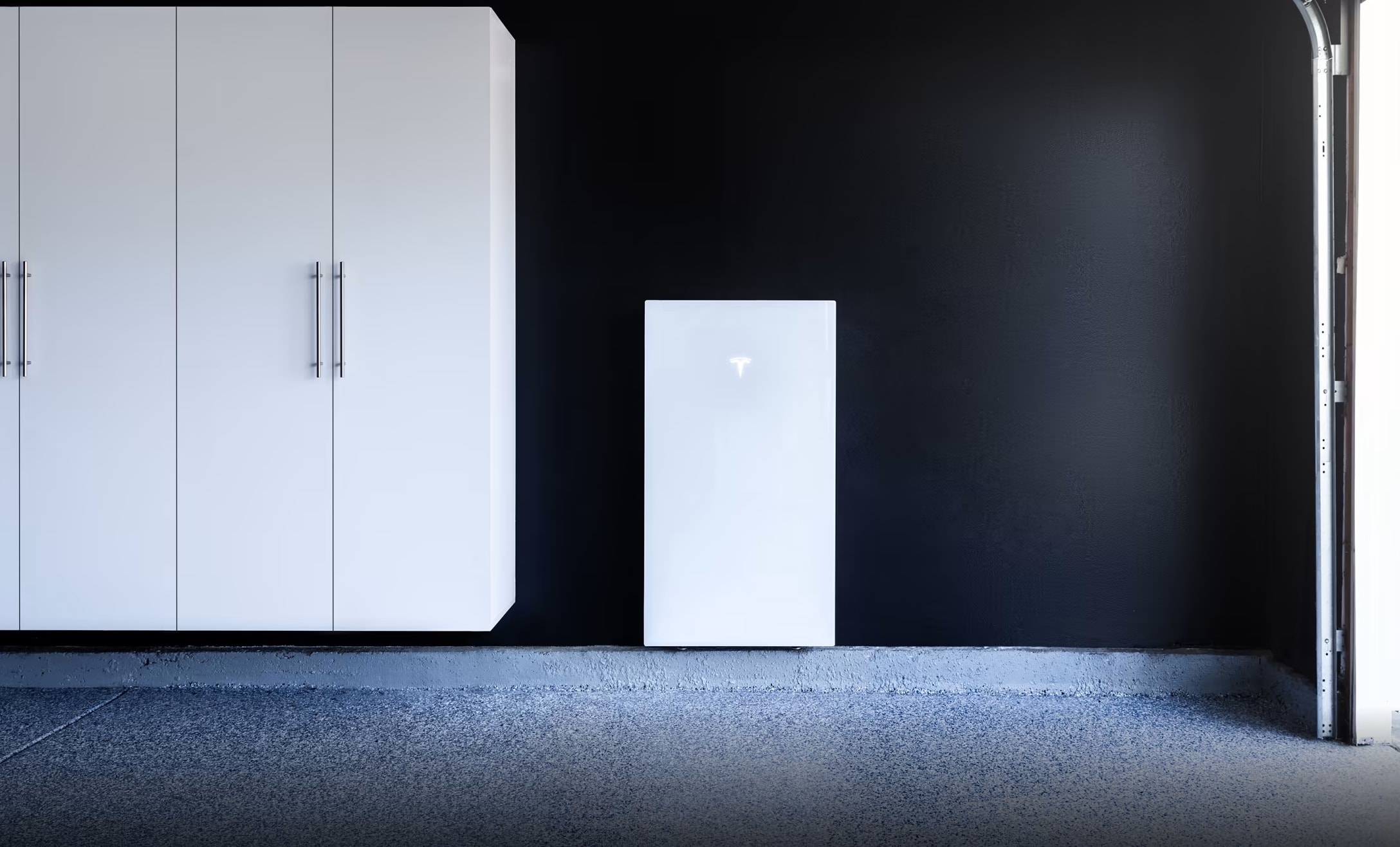
Powerwall is Tesla’s fully integrated, rechargeable home battery that stores energy daily from solar or the grid to back up your entire home during an outage. When a power outage occurs, Powerwall automatically detects the outage and instantly powers your home with stored backup energy1. If a storm is forecast, Storm Watch automatically charges your Powerwall to 100% to ensure you are prepared2.
Powerwall can be installed indoors or outdoors, wall-mounted or floor-mounted, paired with solar or without and operates in both very cold and hot temperatures1.
What is a Backup Generator
A backup generator is a device powered by fossil fuel such as liquid propane, diesel or gas to power your home during an outage. Depending on the size of the generator, it can provide power for your home while fuel supply lasts.
A backup generator is mostly installed outdoors, requiring additional construction work. It may require regular maintenance, as they are used infrequently, to ensure they are functional and have adequate fuel.
Cost Savings of Powerwall vs. Backup Generator
Providing Monthly Value Beyond Backup3

Lower Ten-Year Cost4

When paired with solar, Powerwall works daily to reduce your monthly electricity bill. Over ten years of using your energy system, these savings can make Powerwall and solar more cost effective than a generator. When leasing your energy system, over ten years, customers can save more than $9,350 when compared to owning a backup generator4,5. After ten years, a generator may need to be replaced whereas solar and Powerwall will help you continue to save.
Powerwall creates savings by storing excess solar energy to power your home. Powerwall, paired with or without solar, can be set to increase savings with Time-Based Control, using smart charging and discharging to maximize the economic value of your home energy system1.
In some regions, Powerwall can participate in Virtual Power Plants (VPP), a network of homes with solar and battery systems that work together as a single power plant. Stored energy in Powerwall may be used when the grid needs emergency support, and through partnering programs, Powerwall can earn you money6.
Differences Between Powerwall and Backup Generator
| Powerwall | Backup Generator | |
|---|---|---|
| Experience | Automatic, < 1 second transition to back up, without interruption | 15-30 second delay, before automatic or manual backup |
| Energy Source | Stored electricity from solar panels or the grid | Natural gas, liquid propane or diesel |
| Noise | Quiet (< 40 dBA at 1 meter)7 | Louder (77 dBA at 1 meter) |
| Installation | Indoors or outdoors, wall-mounted or floor-mounted | Outside, generally on concrete pad, due to odor and exhaust |
| Maintenance | Minimal | Refuel, servicing and oil changes |
|
Financial Value |
Reduces your electricity bill by storing solar or energy from the grid when prices are low | Has no effect on your electricity bill |
|
Grid Services |
Earn money by participating in Virtual Power Plants and energy retail plans like Tesla Electric6 | Can’t participate in Virtual Power Plants |
| Warranty | 10 years 1 | 5 years |
|
Environmental Impact |
Powered by the sun | Produces toxic fumes that may expose you to hazards like carbon monoxide poisoning8 |
Next Steps
Be prepared for the next power outage and get started by ordering Powerwall for your home. You can also speak to a Tesla Advisor to find out more about Powerwall.
Depending on your area, federal and local incentives are available when purchasing a home battery. Sign up to receive the latest on available incentives, Tesla news, events and product updates.
Additionally, explore resources to understand how Powerwall works:
References
1 Tesla, How Powerwall Works, https://www.tesla.com/support/energy/powerwall/learn/how-powerwall-works
2 Tesla, Storm Watch, https://www.tesla.com/support/energy/powerwall/mobile-app/storm-watch
3 Tesla. Average monthly utility bills were estimated using historical 2024 residential load profiles from customers within Tesla's fleet with 8 kW of solar and one Powerwall. These estimates were based on active utility tariffs available in each respective utility at the time of calculation. Actual utility bills will vary based on individual electricity consumption, household load patterns, rate plan selection and changes to utility tariffs over time. These figures are provided for informational purposes only and do not guarantee future billing outcomes.
4 Tesla. Comparison of a typical 10 kW backup generator financed with a 10-year loan at 7.24% APR and 10% down payment versus an 8 kW solar system, one Powerwall, and Backup Switch financed with a 25-year lease including a 3% escalator and $600 down payment. Average U.S. residential electricity costs escalate with 2% annual inflation.
5 U.S. Energy Information Administration, Annual Electric Power Industry Report (Form EIA-861), https://www.eia.gov/electricity/data/eia861/. Tesla estimates these savings based on typical residential usage for customers on a standard time-of-use residential tariff and that the customer participates in a median number of utility-sponsored demand response events. Actual savings may vary based on your utility provider.
6 Tesla, Virtual Power Plant, https://www.tesla.com/support/energy/powerwall/virtual-power-plant
7 Bureau of Transportation Statistics, National Transportation Noise Map, https://www.bts.gov/newsroom/bts-releases-national-transportation-noise-map. A refrigerator humming sound level is approximately 40 dBA. A vacuum cleaner sound level is approximately 70 dBA.
8 FEMA, Use Generators Safely at Home, https://www.fema.gov/fact-sheet/use-generators-safely-home